 ultimate-guide
Strengthening Marriage Through Faith: A 2026 Guide
Table of Contents
- Why Strengthening Marriage Through Faith Works Differently
- Biblical Principles for Marriage Restoration
- How to Stop Repetitive Marriage Arguments with Faith-Based Conflict Resolution
- Christian Marriage Communication Tools That Build Real Intimacy
- Prayer, Worship, and Spiritual Unity in Marriage
- Navigating Faith Differences and Mental Health in Marriage
- Strengthening Marriage Through Faith: Building Habits That Last
- Conclusion
Last Updated: August 27, 2026
Why Strengthening Marriage Through Faith Works Differently
Strengthening marriage through faith goes deeper than communication frameworks or date nights, it addresses the root, not just symptoms. At Faithful Family Coaching, we work with couples who have tried conventional counseling and found it incomplete. It addressed behavior without addressing the covenant, helping couples communicate calmly without healing the wounds that kept reopening.
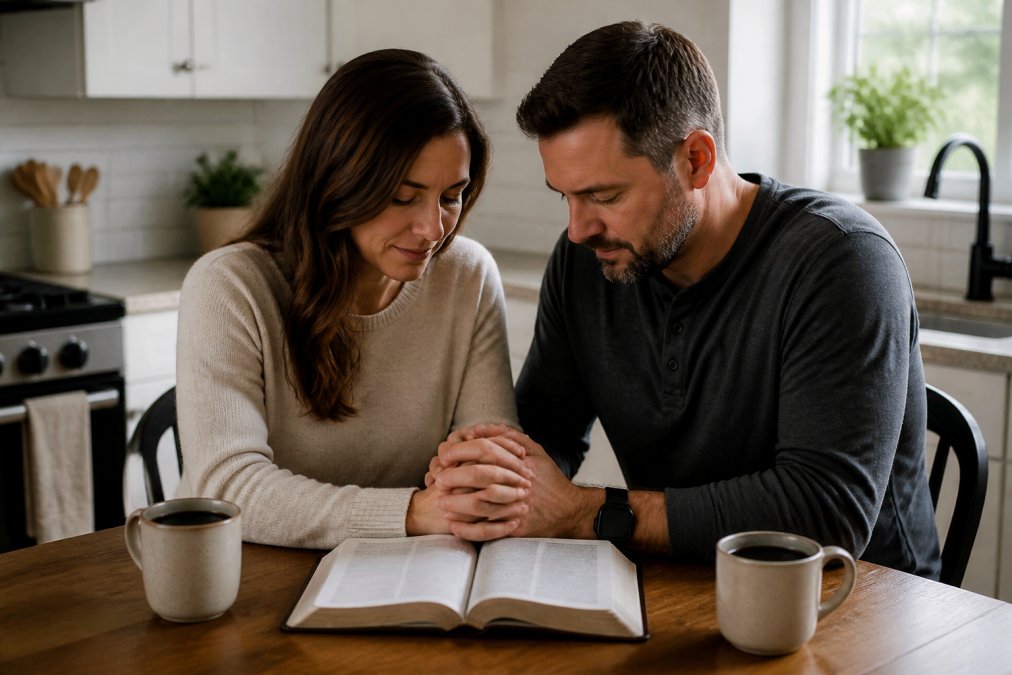
The faith-centered approach frames marriage as a divine covenant rather than a mutual agreement. A contract can be renegotiated when conditions change; a covenant holds even when conditions are hard, grounded in something larger than either partner's emotional state. When both partners see their marriage as an act of worship and stewardship, they answer not just to each other but to God. That shared orientation creates relational gravity that pulls the marriage back toward its center, even after significant drift. Faith doesn't make marriage easy, it gives the marriage a foundation that secular frameworks cannot replicate.
Biblical Principles for Marriage Restoration
Biblical marriage restoration begins with one conviction: the marriage is worth fighting for because God designed it to reflect His covenant love. That conviction, held by both partners, is the starting point for every practical step that follows.
Covenant Over Contract: Reframing Your Commitment
Most couples in conflict have unconsciously shifted from a covenant mindset to a contract mindset, keeping score, waiting for the other person to change first, measuring whether the relationship is "worth it" by what they're getting out of it. The biblical foundation for marriage presents a different model. Covenant love is unconditional and oriented toward the other person's good. Ephesians 5 describes mutual submission and servant leadership, not a power arrangement. According to The Gospel Coalition's marriage resources, the covenant framework distinguishes Christian marriage from every other relational model.
Reframing your commitment means returning to your vows not as a legal document but as a declaration made before God. Many couples find that reading their original vows aloud together, even years into a difficult season, shifts something emotionally significant.
Scripture Study as a Shared Practice
Scripture study as a shared practice is one of the most underused tools in Christian marriage restoration. Reading the Bible together creates a shared reference point for interpreting conflict, forgiveness, and growth. Start smaller than a formal devotional: one passage three times per week, followed by five minutes of honest conversation about what each partner noticed. The goal is spiritual intimacy and a shared language for your marriage, not theological mastery.
How to Stop Repetitive Marriage Arguments with Faith-Based Conflict Resolution
Repetitive marriage arguments are not about dishes, budgets, or in-laws, they're about unmet needs and unhealed wounds surfacing through different triggers. Most recurring fights are the same argument wearing different clothes.
Identifying the Emotional Patterns Beneath the Surface
Common underlying patterns include fear of abandonment expressed as criticism, fear of inadequacy expressed as defensiveness, unprocessed grief expressed as irritability, and shame expressed as blame-shifting. According to The American Association for Marriage and Family Therapy, recurring conflict patterns are among the most common reasons couples seek professional support and rarely resolve without intentional intervention.
Faith adds what secular frameworks miss: the willingness to examine your own heart before addressing your spouse's behavior. Proverbs 4:23 instructs guarding the heart above all else, because everything flows from it. That is a conflict resolution directive.
A Step-by-Step Framework for Faith-Centered Conflict
- Pause and pray individually. Take two minutes to ask for clarity, patience, and a servant's heart.
- Name the emotion, not the accusation. "I feel afraid that I don't matter to you" lands differently than "You never listen to me."
- Identify the underlying need. What unmet need, security, respect, connection, lies beneath the emotion?
- Invite your spouse to reflect it back. Ask them to repeat what they heard, without rebuttal.
- Find a shared value. What do both of you actually want for this marriage?
- Pray together before closing. This declares that the marriage belongs to God and both partners are submitting the conflict to His guidance.
This framework won't work perfectly the first time. Perseverance matters more than perfection.
Christian Marriage Communication Tools That Build Real Intimacy
Christian marriage communication tools work best when rooted in both relational science and biblical truth. The goal is not just to argue less but to know each other more deeply, which is the foundation of genuine marital intimacy.
Daily Devotional Practices for Couples
Five to ten minutes of shared Scripture reading and prayer in the morning creates a relational tone that carries through the day. Read one short passage together, each partner shares one word or phrase that stood out, then each prays briefly for the other's specific need. This practice builds mutual respect, trust, and daily encouragement that accumulates over time. Couples who pray together regularly report feeling more emotionally available, more patient during conflict, and more committed to the marriage's long-term health.
Interactive Spiritual Exercises to Try This Week
Exercise 1: The Gratitude Exchange Each evening, share one specific thing you appreciated about the other that day. Specificity is what makes this land.
Exercise 2: The Prayer Request Swap Each morning, share one thing you're carrying emotionally or spiritually. The other partner prays for that specific thing before the day begins.
Exercise 3: The Covenant Renewal Letter Once per quarter, write a short letter reaffirming your commitment and naming one way you want to grow as a spouse. Read them aloud together and keep them.
Exercise 4: Scripture Memorization Together Choose one verse per month that speaks to your marriage. Memorize and recite it when conflict arises.
Prayer, Worship, and Spiritual Unity in Marriage
Spiritual unity in marriage is not automatic, it is built through consistent, intentional practice of prayer, worship, and shared faith expression.
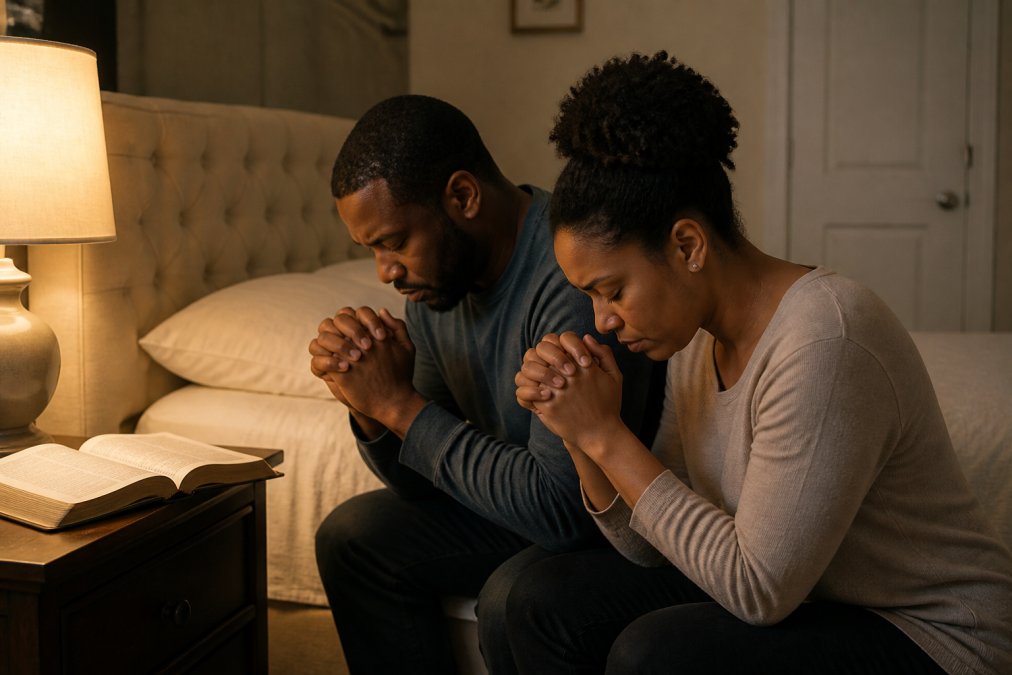
Intercessory prayer for your spouse, praying for their specific struggles, fears, and hopes, creates intimacy that conversation alone cannot produce. When you pray for your spouse, you pay attention to them and care about what they're carrying. Worship together, whether through church attendance, shared music, or personal devotional time, creates a sense of shared covenant that anchors the marriage in something beyond daily friction. Church community provides accountability, social support during hard seasons, and a shared framework for interpreting marital challenges.
A practical starting point: commit to attending one worship service together per week and debrief for ten minutes afterward. What did you hear? What challenged you? What do you want to bring into your marriage?
Navigating Faith Differences and Mental Health in Marriage
Not every Christian couple is at the same place spiritually. One partner may have a more active prayer life; one may struggle with doubt. Spiritual compatibility is not the same as spiritual uniformity. Two people can be deeply committed to their faith and practice it differently. The key is mutual respect for where each person is, not pressure to match.
Faith differences become damaging when they create a hierarchy, where one partner's spiritual life is the standard and the other's is deficient. That erodes trust faster than almost any other pattern.
Mental health intersects with faith in ways many Christian couples aren't prepared to discuss. According to the American Psychological Association's resources on religion and mental health, faith can be a significant protective factor, but it doesn't replace clinical support when warranted. A faith-centered approach holds both truths: prayer matters, and so does professional mental health care when needed.
Strengthening Marriage Through Faith: Building Habits That Last
Strengthening marriage through faith is not a one-time intervention, it's a set of daily and weekly habits that, compounded over time, produce marital bonds that withstand genuine hardship.
Habit | Frequency | Primary Benefit |
|---|---|---|
Prayer for your spouse by name | Daily | Builds intercessory intimacy |
Gratitude exchange | Daily | Builds daily encouragement |
Prayer request swap | Daily | Builds vulnerability and trust |
Scripture reading together | 3x per week | Builds shared spiritual language |
Devotional debrief | Weekly | Builds spiritual unity |
Church attendance and debrief | Weekly | Builds accountability and community |
Covenant renewal letter | Quarterly | Renews commitment and direction |
Couples who sustain marital satisfaction over the long term are not those with the best start, they're those who built resilience through consistent practice. Relational health is a discipline, not a destination.
A common objection: "We've tried routines before and they fall apart." The difference between habits that stick and those that don't is usually not motivation, it's structure and accountability. Having a coach or community that holds you to the practices matters more than willpower.
Faithful Family Coaching works specifically with couples ready to move beyond inspiration into structured, faith-centered accountability that produces real change. The focus is identifying deep-seated emotional patterns beneath recurring conflict, building practical communication tools, and creating sustainable habits one faithful step at a time.
Strengthening marriage through faith requires showing up for your spouse and for God's design for your marriage, especially on the days when it feels impossible.
Frequently Asked Questions
How can couples integrate faith into their daily marriage routine?
Start small and consistent. A five-minute morning devotional, a shared scripture verse texted during the day, or a brief prayer before bed all build spiritual connection over time. The goal is not length but regularity. Choose one practice, commit to it for 30 days, and add more as it becomes habit.
What role does prayer play in resolving marital conflict?
Prayer shifts the dynamic from two opponents to two partners appealing to the same source of guidance. Praying together before a difficult conversation lowers defensiveness and invites patience and grace into the room. Intercessory prayer, where each spouse prays specifically for the other's needs and struggles, builds empathy that is hard to manufacture through technique alone. Many couples find that conflict loses its grip when both partners regularly bring it before God rather than just to each other.
What are the biblical principles for a healthy and lasting marriage?
The most foundational biblical principles for marriage include covenant commitment (Malachi 2:14), sacrificial love modeled in Ephesians 5, mutual submission and servant leadership, and the practice of forgiveness as described in Colossians 3:13. Practically, these translate into prioritizing your spouse's wellbeing over being right, returning to shared values during conflict, and treating the marriage as a calling rather than a convenience. Strengthening marriage through faith means letting these principles shape daily decisions, not just Sunday conversations.
How does faith-based coaching differ from traditional marriage counseling?
Traditional therapy often focuses on communication techniques and emotional regulation in isolation from any spiritual framework. Faith-based coaching integrates biblical principles, prayer, and shared values as active tools for change, not just background context. It also tends to address the deeper patterns driving conflict rather than managing surface symptoms. For couples who feel their faith is central to who they are, a coaching approach that honors that foundation often produces more durable results because it aligns with their existing worldview and sense of purpose.
How can spiritual intimacy improve emotional connection in marriage?
Spiritual intimacy creates a layer of connection that emotional and physical intimacy alone cannot reach. When spouses share their faith struggles, pray honestly with each other, and pursue spiritual growth together, they build trust at a deeper level. This shared vulnerability often unlocks emotional honesty that couples have avoided for years. Couples who develop a consistent prayer life and devotional rhythm together consistently report improved marital satisfaction and a stronger sense of being genuinely known by their partner.
Is faith-based marriage coaching only for couples with minor problems?
No. Faith-based coaching is designed to address deep-seated conflict patterns, not just tune-ups for couples who are mostly fine. Couples dealing with years of recurring arguments, emotional distance, or serious trust issues can benefit significantly from a structured, faith-centered process that identifies the emotional patterns beneath the conflict. The key difference is that this approach treats the root causes rather than the presenting symptoms, which makes it relevant for couples at any stage of distress.
This article was written using GrandRanker