 Listicle
What Are Christian Marriage Enrichment Activities?
Last Updated: October 27, 2026
Quick Summary
Christian marriage enrichment activities are structured exercises in conversation, prayer, and reflection that help couples connect beneath surface conflicts. Options range from a twenty-minute speaker-listener practice at home to a do-it-yourself weekend retreat, matched to your relationship stage and needs.
- The speaker-listener practice has one spouse speak five minutes while the other listens, then summarizes.
- A do-it-yourself retreat needs two days, a sitter, and a plan, not a venue.
- Assign one facilitator per four to six couples when running a group retreat.
- Couples busy with young children can start with a shared prayer list, five minutes daily.
- Close every exercise by writing one habit, one check-in date, and one question.
Table of Contents
- Why Christian Marriage Enrichment Activities Work
- Marriage Communication Exercises for Couples
- Christian Couples Date Night Ideas That Go Deeper
- Prayer Activities for Married Couples
- Christian Marriage Retreat Ideas for Groups and Couples
- Matching Activities to Your Relationship Stage and Needs
- When Enrichment Isn't Enough: Boundaries and Professional Help
- Applying for Faith-Centered Coaching as Your Next Step
- Frequently Asked Questions
Why Christian Marriage Enrichment Activities Work
Christian marriage enrichment activities work because they give couples a shared structure for honest conversation, prayer, and reflection that daily routines rarely allow.
Enrichment activities create that space. They range from a twenty-minute conversation exercise at the kitchen table to a full weekend retreat, and they share one purpose: helping couples see the patterns beneath their surface conflicts.
If you have tried date nights that turned into logistics meetings, you know the difference between spending time together and actually connecting. Below, we break down specific activities you can use this week, plus how to match them to where your marriage is right now.
Marriage Communication Exercises for Couples
Communication exercises for couples are structured practices that slow down a conversation so both partners can speak and be heard without defensiveness taking over. The goal is not to resolve every disagreement in one sitting. It is to build a habit of listening before responding.
The Speaker-Listener Conversation Practice
The speaker-listener conversation practice is a simple format with clear rules. One spouse speaks for a set time while the other listens without interrupting, defending, or problem-solving. Then the listener summarizes what they heard before responding.
Here is how to run it:
- Choose a low-stakes topic first, such as a recent week or a memory you both enjoy.
- Set a timer for five minutes. The speaker shares without the listener commenting.
- The listener restates what they heard: "What I heard you say is..."
- The speaker confirms or corrects the summary.
- Switch roles and repeat.
Most couples find the summary step is where the real work happens. You quickly learn how often you hear an assumption rather than the actual words. For a deeper look at why this practice matters, see why active listening matters for Christian couples.
Christian Couples Date Night Ideas That Go Deeper
Christian couples date night ideas work best when they move past entertainment and into reflection. A dinner out is fine. A dinner out with one good question on the table is better. Readers planning deeper date nights can find ideas for building intimacy through shared spiritual practices.
Try these:
- The past blessings review. Each spouse names three moments from the past year where they saw God provide. Then discuss what those moments reveal about your shared story.
- The strengths swap. Each partner names two relationship strengths they see in the other and one they want to grow together.
- The open question. Pick one question neither of you has asked before, such as "What do you need more of from me right now?"
- A serving night. Do one small act of service together, then talk about what it stirred.
Prayer Activities for Married Couples
Prayer activities for married couples turn prayer from a private habit into a shared practice. Many couples pray separately for years without ever praying together, and the gap often mirrors a wider emotional distance.
Start small. One partner can pray aloud for two minutes while the other listens. Then swap. No formulas, no performance.
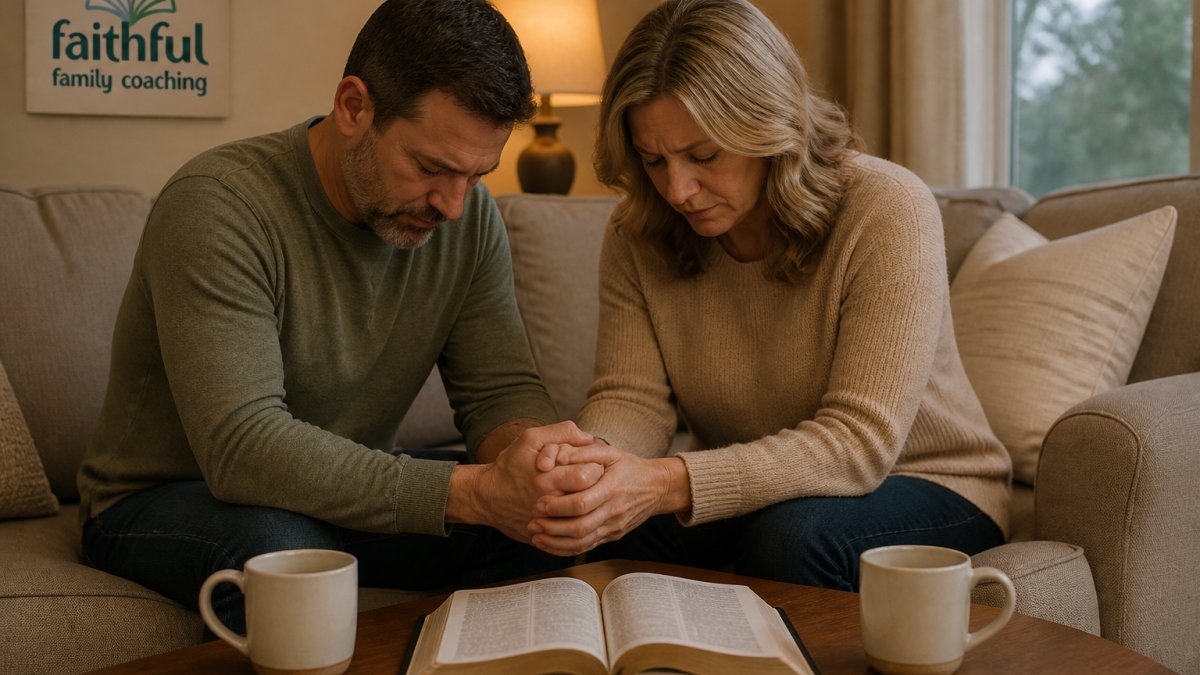
Other options include praying a short passage of Scripture together, keeping a shared prayer list on the fridge, or ending the day with one sentence of gratitude aloud. For practical guidance on using prayer to deepen emotional connection, see how to improve emotional connection through prayer. The practice matters more than the length.
Christian Marriage Retreat Ideas for Groups and Couples
Christian marriage retreat ideas fall into two broad categories: organized retreats you attend and do-it-yourself retreats you build. Organized options include faith-based getaways and small-group programs. For a comparison of marriage enrichment programs and retreat options, see our guide. These are worth attending when you want teaching, childcare, and a structured schedule handled for you.
A do-it-yourself retreat is often the most accessible option. You do not need a venue. You need two days, a sitter, and a plan. The plan below works for a single couple at home or for a small group meeting at a church fellowship hall.
A Ready-to-Use Weekend Plan With Timing and Materials
Materials: two notebooks, two pens, a Bible, a timer, a shared meal you both enjoy, and a printed copy of the speaker-listener rules. For a group, add name tags, a whiteboard or easel pad, and one facilitator per four to six couples.
Saturday morning (9:00-11:30): Breakfast together, then a ninety-minute conversation using the speaker-listener practice on one recurring conflict. Each spouse gets fifteen minutes to speak and five minutes to be summarized. Close with ten minutes of silent prayer.
Saturday afternoon (1:00-4:00): A two-hour break apart for rest or a walk, then a one-hour review of past blessings and current prayers. Couples write three blessings and three prayer requests in their notebooks and exchange them.
Saturday evening (6:00-8:00): A shared meal with phones away, followed by thirty minutes of guided prayer. One spouse prays for the other's three requests aloud; then swap.
Sunday morning (9:00-10:00): A one-hour planning session: what one habit will you each carry into the week? Write it down, set a check-in date, and pray over it together.
Running the Retreat for a Group
If you are facilitating for several couples, keep three rules. First, pair couples for sharing rather than opening every exercise to the whole room; privacy lowers defensiveness. Second, give a clear opt-out before every personal exercise and never call on a couple to report back. Third, keep teaching segments to fifteen minutes and discussion segments to twenty-five, because couples need more processing time than a typical class. Assign one facilitator per four to six couples so no pair is left without a check-in.
Adapting the Plan
Couples with young children can split the weekend into four two-hour blocks across two weeks. Couples with mobility limitations can substitute a seated review for the walk. Couples who find extended prayer uncomfortable can begin with one sentence of gratitude each and build from there. The sequence matters more than the exact hours.
Matching Activities to Your Relationship Stage and Needs
Not every activity fits every couple. Newly married couples often benefit most from conversation exercises that build listening habits early. Couples in a long season of disconnection may need shared prayer and unhurried time more than another structured worksheet. Couples navigating a specific conflict benefit from the speaker-listener format applied directly to that issue.
| Relationship Stage | Best Starting Activity | Time Needed | Why It Fits |
|---|---|---|---|
| Newly married | Speaker-listener practice | 20 minutes | Builds listening habits early |
| Busy with young children | Shared prayer list | 5 minutes daily | Low time cost, high consistency |
| Feeling like roommates | Do-it-yourself weekend retreat | One weekend | Resets the pattern |
| Recurring conflict | Speaker-listener on one issue | 30 minutes | Slows the escalation cycle |
| Long marriage, stable | Past blessings review | 45 minutes | Renews shared purpose |
| Rebuilding after a breach of trust | Guided prayer plus a written check-in | 30 minutes weekly | Builds safety before depth |
Low-Cost and At-Home Options
Most couples do not need a retreat center. A notebook, a timer, and a Bible cover the majority of what these activities require. For couples who cannot attend an event, the same exercises work over a video call: share a screen with the prompt, mute during the speaker's turn, and use the chat for the summary step. A shared digital note replaces the fridge list.
Adapting for Disability, Neurodiversity, and Comfort Levels
Every activity in this guide has a lower-intensity version. Couples who find eye contact or long silences uncomfortable can sit side by side rather than facing each other. Couples with attention differences can shorten each speaking turn to three minutes and use a visible timer. Couples with chronic illness or pain can do the review exercises lying down or in short blocks. Couples who dislike writing can speak their answers aloud and record them on a phone. The goal is participation, not performance.
Consent and Trauma-Informed Boundaries
Before any personal exercise, agree on three things out loud: either spouse can pause or skip without explanation, no one is required to disclose history they have not chosen to share, and the exercise ends if either person feels unsafe. A spouse with a history of trauma may find certain prompts overwhelming; that is a signal to adapt, not a failure. If there is ongoing verbal abuse, threats, control, or any form of physical harm, stop the activity plan and seek help from a licensed professional or a pastor trained in safety planning.
Measuring Follow-Through
An activity that ends on Sunday and is never revisited rarely changes a marriage. Close every exercise by writing one habit, one check-in date, and one question you will ask each other. A simple pattern works: at the next check-in, each spouse answers what went well, what was hard, and what they need. Keep the notes in one place so you can see progress over months rather than guessing.
For couples whose conflict keeps returning to the same deep-seated patterns, the issue is rarely a lack of good advice. It is that the pattern itself has never been named. That is where focused coaching differs from a weekend event.
When Enrichment Isn't Enough: Boundaries and Professional Help
Enrichment activities are not a substitute for professional care. If there is ongoing verbal abuse, threats, control, or any form of physical harm, stop the activity plan and seek help from a licensed professional or a trusted pastor trained in safety planning. Enrichment assumes both partners can speak freely. When that assumption fails, the work belongs with a qualified counselor.
Trauma-informed boundaries matter here. A spouse with a history of trauma may find certain exercises overwhelming. Give each other the right to pause, skip, or adapt any activity without explanation. That is not failure. That is care.
For couples whose conflict keeps returning to the same deep-seated patterns, the issue is rarely a lack of good advice. It is that the pattern itself has never been named. That is where focused coaching differs from a weekend event.
Applying for Faith-Centered Coaching as Your Next Step
Most couples can run these activities on their own. Some reach a point where self-guided exercises keep circling the same fight, and they need an outside perspective to name the pattern underneath it.
That is the work we do at Faithful Family Coaching. We help couples identify the deep-seated emotional patterns driving conflict, then build practical tools for communication and connection one faithful step at a time. Our approach is Christian-focused and goes past surface-level advice.
If you are ready to move beyond activities and into focused guidance, apply for faith-centered coaching.
Frequently Asked Questions
What are some Christian marriage enrichment activities couples can do at home?
Start with a weekly 20-minute speaker-listener exercise where one spouse talks for five minutes while the other listens without interrupting, then switch. Add a shared devotional or Bible-based reflection once a week, and pray together before bed. A low-cost date night at home, like a guided discussion over dinner, works well too. The key is consistency rather than length.
How can couples improve communication through faith-based activities?
Marriage communication exercises for couples pair a practical structure with a spiritual frame. The speaker-listener conversation practice teaches active listening by having each partner reflect back what they heard before responding.
What are some activities for a Christian marriage retreat?
A balanced retreat mixes icebreakers, teaching, private conversation, and rest. Build in unscheduled time so couples can talk without an agenda.
How often should married couples make time for intentional connection?
Weekly is the practical baseline. One 30-to-60-minute block for a marriage enrichment activity, plus a brief daily check-in and prayer together, is one possible schedule. Many couples also plan a longer date night monthly and a retreat or conference once a year. If recurring conflict patterns keep resurfacing despite regular activities, consider whether the deeper emotional patterns may be worth exploring.