 how-to
Finding Intimacy Through Shared Spiritual Practices
Last Updated: October 23, 2026
Quick Summary
Shared spiritual practices are regular faith habits, like prayer, scripture reading, and worship, that a couple does together, and research suggests these habits can support emotional closeness and relationship satisfaction. Intimacy grows through small, repeated moments rather than grand gestures, so start with the smallest tier you will actually keep.
- Build a daily tier of five minutes or less, such as a one-sentence bedtime check-in.
- Set a fixed weekly day and time for ten to twenty minutes of prayer together.
- Once a month, go longer with a faith walk, shared service act, or review conversation.
- Use a four-part prayer structure: thanks, honesty, ask, and thirty seconds of listening.
- When one partner hesitates, lead gently, lower the bar, and never keep score.
Table of Contents
- Why Shared Spiritual Practices Build Real Intimacy
- Shared Spiritual Practices for Couples That Fit Real Life
- Praying Together as a Couple When It Feels Awkward
- Couples Bible Study Ideas for Every Comfort Level
- Faith-Based Marriage Communication That Lowers the Temperature
- When One Partner Is Hesitant, Skeptical, or Less Religious
- Troubleshooting Conflict and Spiritual Differences
- Frequently Asked Questions
Why Shared Spiritual Practices Build Real Intimacy
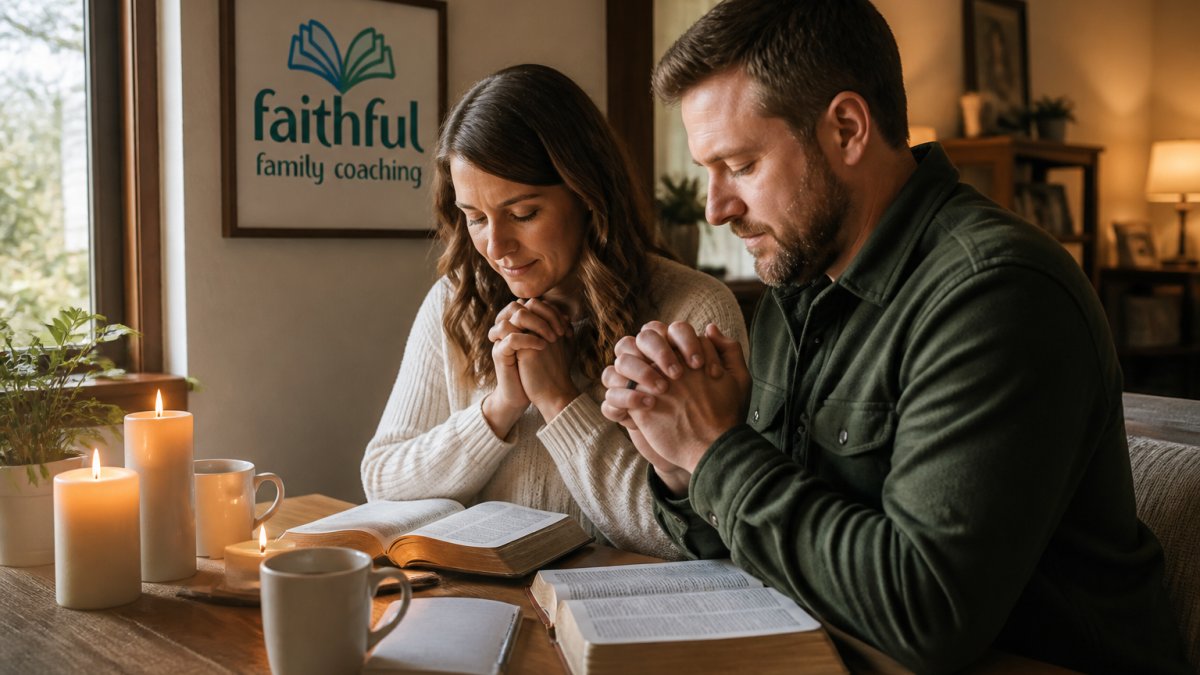
Shared spiritual practices are regular faith habits, like prayer, scripture reading, and worship, that a couple does together.
The habits matter less than the honesty behind them.
Spiritual intimacy is the closeness a couple feels when they share their faith openly, without performing or hiding. It grows through small, repeated moments, not grand gestures.
Here is what we cover below: a simple weekly rhythm, prayer and Bible study ideas, and what to do when one partner hesitates.
Shared Spiritual Practices for Couples That Fit Real Life
The best shared spiritual practices for couples are short, repeatable, and easy to protect. Busy schedules kill big plans. Small habits survive.
Below is a progressive routine built in three tiers. Start at the tier that matches your current season, not the one you aspire to. Most couples who try to jump straight to the monthly tier burn out inside three weeks.
The Daily Tier: Five Minutes or Less
Pick one, not all three:
- A one-sentence check-in. Before bed: "Where did you see God today?" One sentence each. No follow-up required.
- A shared pause. Thirty seconds of silence together before a meal, with a single spoken "thank you", no formal prayer language required.
- A verse on the fridge. One passage written on an index card, read silently by whoever passes it. No discussion needed that day.
A common pattern among couples new to this: the daily tier feels too small to count. It isn't. The point of the daily tier is not depth, it is keeping the channel open so the weekly tier has something to work with.
The Weekly Tier: Ten to Twenty Minutes
Choose a fixed day and time and treat it like an appointment. Turn off phones. Sit facing each other. Use this structure:
- Open with one minute of quiet. Breathe and settle.
- Each partner shares one honest sentence. "This week I felt close to God when..." or "This week I struggled with..."
- Pray aloud for one minute each. Short and plain is fine.
- Close with a hug. Physical touch anchors the moment.
That's it. No curriculum, no pressure. The rhythm itself builds trust over time.
The Monthly Tier: Thirty to Sixty Minutes
Once a month, go longer. Options, pick one:
- A faith walk. Walk together for thirty minutes and talk about one question: "What is one thing you want to grow in this month?"
- A shared service act. Volunteer together once a month, a food bank shift, a neighborhood cleanup, a meal delivered to a neighbor. Serving side by side often produces more spiritual conversation than a structured study.
- A review conversation. Ten minutes on what worked, ten on what didn't, ten on what to try next month. This is the maintenance step most couples skip, and it is the one that keeps the routine alive past month three.
Adapting the Routine to Your Season
A routine that ignores your actual life is a routine you will abandon. Adjust the tier, not the goal:
- New parents or caregivers. Drop to the daily tier only. A single sentence at bedtime is a complete practice in this season.
- Shift workers or long-distance couples. Do the weekly tier by phone or video. Read the same passage separately and discuss it on a call.
- Chronic illness or disability. Choose practices that do not require energy you don't have. The shared pause before a meal works from a recliner.
Praying Together as a Couple When It Feels Awkward
Praying together as a couple feels awkward for most people at first. That's normal, not a sign something is wrong. You are learning a new habit with an audience of one.

A common mistake is waiting until you feel ready. You won't. Start clumsy and short.
A Simple Prayer Structure for Beginners
Use this four-part structure, which keeps prayer focused and short:
- Thanks: Name one thing you're grateful for.
- Honesty: Name one worry or struggle.
- Ask: Ask for one thing you need as a couple.
Trade off who leads each week. Shared leadership prevents one partner from carrying the whole weight.
Couples Bible Study Ideas for Every Comfort Level
Couples Bible study ideas range from a single verse to a full workbook, and the right one depends on your comfort level. For a simple, doable guide to leading a study together, see How To Lead Simple And Powerful Family Bible Studies. Start below your ceiling, not at it. The most common failure pattern is a couple buying a twelve-week workbook in a burst of enthusiasm and quitting in week two; the second most common is a couple staying on one-verse reading for a year because neither wants to suggest more.
Here are three formats by comfort level, with the actual prompts to use:
| Comfort Level | Format | Time Needed | Best For |
|---|---|---|---|
| Low | One verse read aloud, then one question each | 5 minutes | Couples new to faith sharing |
| Medium | A short devotional with discussion prompts | 15-20 minutes | Couples building a habit |
| High | A structured study with homework | 30-45 minutes weekly | Couples who want depth |
Low Comfort: One Verse, One Question
Read the verse aloud, then each partner answers one question. Keep a short list of passages that work well for this format, the Sermon on the Mount, a Psalm of lament, the Prodigal Son, the Good Samaritan. The question matters more than the passage:
- "What word or phrase stood out to you?"
- "Where do you see yourself in this story?"
- "What would it look like to live this out this week?"
No commentary, no cross-references, no homework. Five minutes, done.
Medium Comfort: A Short Devotional With Prompts
A fifteen-minute devotional works best when it has three parts: a short reading, two or three discussion prompts, and a closing prayer. You can use a published devotional or build your own from a passage. The prompts should invite personal response, not doctrinal agreement:
- "When in your life did this passage feel true?"
- "What makes this passage hard to believe right now?"
- "What is one small thing you could do differently this week because of it?"
High Comfort: A Structured Study With Homework
A thirty-to-forty-five-minute weekly study with homework suits couples who want depth and have the margin for it. Choose a book of the Bible or a topical study and commit to a set number of weeks, six to eight is a realistic first run. Read the homework separately during the week and discuss it together on the study day. The homework is where the depth comes from; the discussion is where the connection comes from.
When You Don't Share the Same Beliefs
A Bible study assumes both partners are reading the Bible. If one partner is skeptical, of a different faith, or not religious, the format needs to change, not the goal. Options that preserve the shared practice without requiring shared belief:
- Read the passage as literature. "What is this text trying to say, and do you find it persuasive?" Both partners can answer honestly.
- Pair the passage with a text from the other partner's tradition. Read one Psalm and one passage from another sacred text side by side and compare what each says about the same theme, gratitude, grief, forgiveness.
- Use a values prompt instead of a verse. "What is one thing you want to be true of us this week?" The conversation is the practice.
Keep one rule: no lecturing. The goal is conversation, not a sermon. If one partner starts teaching and the other starts defending, the format has failed, drop a level and try again next week.
Faith-Based Marriage Communication That Lowers the Temperature
Faith-based marriage communication lowers conflict by changing how you speak, not just what you say. For biblical communication skills for couples to apply directly, see our guide. Scripture sets a clear standard here: be quick to listen and slow to speak.
Three habits that lower the temperature:
- Soften the start. "I felt alone last night" lands better than "You ignored me."
- Pause before responding. Ten seconds of silence prevents most escalation.
- Pray before hard talks. A short prayer shifts the tone from opponents to partners.
When One Partner Is Hesitant, Skeptical, or Less Religious
When one partner is hesitant, the engaged partner should lead gently and without pressure. For dealing with a hesitant spouse in more depth, see our Christian guide. Push too hard and you get compliance or resistance, not connection.
What helps:
- Start with what they already value. Ask what they'd want prayer to cover, not whether they want to pray.
- Lower the bar. "Can we try one minute?" is easier to accept than a full routine.
- Drop the scoreboard. Never track who prays more or who skipped.
Troubleshooting Conflict and Spiritual Differences
Spiritual differences cause real conflict, and avoiding them makes it worse. For biblical conflict resolution strategies for couples, see our guide. Name the difference directly and calmly.
Common trouble spots and fixes:
- Different beliefs or none at all. Focus on shared values, like honesty and kindness, instead of arguing doctrine.
- One partner feels spiritually superior. This "one-upmanship" damages closeness. A 2020 study available through PubMed Central found greater spiritual intimacy linked to less frequent marital conflict, but only after accounting for this pattern.
- Prayer becomes a performance. Shorten it and drop the religious language.
Research also links spiritual intimacy to marital satisfaction through emotional intimacy, according to a study available through PubMed Central. That means working on emotional closeness is part of the spiritual work.
Frequently Asked Questions
What are some examples of spiritual intimacy in a marriage?
Spiritual intimacy shows up in small, repeatable moments: praying together before bed, reading a passage of scripture and talking about what stood out, asking each other where you saw God work that week, or worshiping together on Sunday and debriefing the sermon afterward. Research published in 2020 through PubMed Central found that greater spiritual intimacy reported by both spouses was associated with less frequent marital conflict, even after accounting for other stable factors. The common thread is openness, not performance. The goal is honest conversation about your faith journey, not a perfect devotional routine.
How do you start praying together as a couple if neither of you has done it before?
Start smaller than feels impressive. Set a ten-minute window once a week, hold hands, and take turns praying one or two sentences out loud. Pray for the week ahead, for each other by name, and for one thing you are grateful for. Skip the pressure to sound eloquent. If praying out loud feels exposing, begin by reading a written prayer together or praying silently side by side and sharing one sentence afterward. Consistency matters more than length, and most couples find the awkwardness fades within a few weeks of regular practice.
What if one partner is more spiritual than the other?
Unequal enthusiasm is common and does not disqualify the practice. The partner with more energy should resist turning shared practices into a spiritual performance review. Instead, invite rather than require: offer one low-pressure option, such as listening to a short devotional together, and let the other partner choose whether to engage. Research on spiritual one-upmanship suggests that positioning yourself as the more mature believer can increase conflict. Approach the gap with curiosity and vulnerability, and let shared spiritual practices grow at a pace both partners can sustain.
Can shared spiritual practices improve communication in marriage?
They can, but indirectly. The mechanism is not the ritual itself; it is what the ritual trains. Praying together requires listening, pausing, and speaking honestly, and those are the same muscles faith-based marriage communication depends on. Studies available through PubMed Central have linked perceived spiritual intimacy to marital satisfaction through emotional intimacy, which suggests the benefit runs through closeness rather than through the practice alone. Treat shared practices as a training ground for honest conversation, not a substitute for learning to repair conflict directly.
Spiritual intimacy grows one faithful step at a time, not in a single breakthrough. If repeated arguments and surface-level fixes have left you feeling like roommates, Faithful Family Coaching can help. We help couples identify the deep-seated emotional patterns beneath conflict, learn practical tools for communication and connection, and build healthier habits together. Apply to get started and take your first faithful step toward lasting connection.